Shipping Nationwide




Shipping Nationwide
Overview
- Wide flange beams play a vital role in construction because they provide the structural integrity needed for different types of projects. Each type offers distinct benefits depending on the scale, layout, and load requirements of a structure.
- This article breaks down the differences between commonly used wide flange beams and explains how they’re applied across various building environments. With thoughtful planning and the right materials, contractors can ensure they create more efficient builds.
- With Linton Incorporated’s expertise, builders are equipped with high-quality solutions that align with today’s demanding structural standards and support both conventional and specialized construction needs.
Wide-flange beams are essential components in today’s construction, valued for their load-bearing capabilities and adaptability in various environments. With the right type of beam, structures gain durability and improved efficiency in maximizing space and achieving long-term stability.
For contractors, understanding the different types of wide flange beams for construction can help them make better material choices. Linton Incorporated provides expertly engineered solutions tailored to meet all kinds of construction demands—from large-scale commercial projects to custom builds, we have what you need to optimize structural planning. Take a closer look at how each beams differ in use.
H-Beams are among the most commonly used wide flange beams in construction due to their balanced geometry. With webs and flanges that are nearly equal in thickness, they offer superior load distribution in all sorts of applications, whether vertical or horizontal.
Their broad flange makes them especially effective for supporting heavy loads over longer spans, minimizing the amount of vertical supports needed.
These beams often find use in the following:
Due to their ability to resist bending as they carry heavy axial loads, H-Beams are often the backbone of many load-intensive frameworks. Linton Incorporated manufactures H-Beams designed to meet structural codes while maximizing efficiency. You can trust our solutions to provide ample support, even across complex builds.
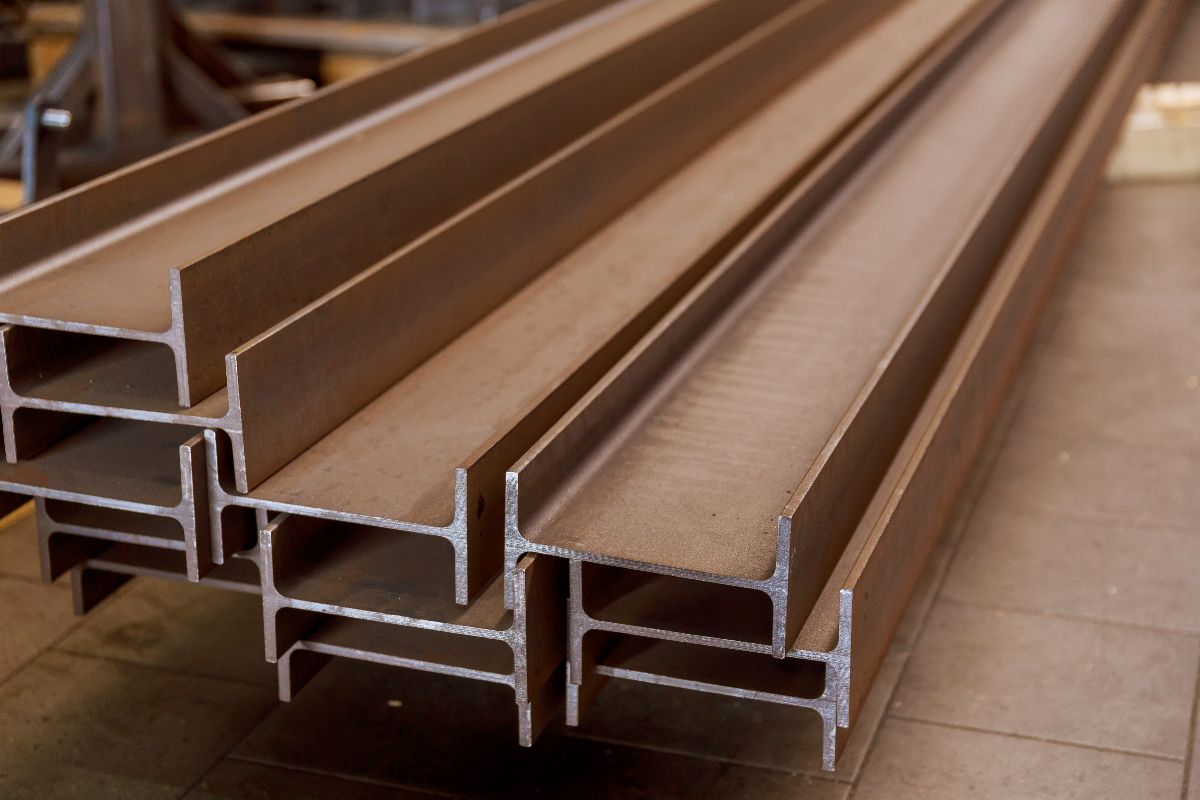
This structural component also provides valuable support in construction. Unlike H-beams, however, they’re more suitable for projects with moderate loads. Their shape makes them well-suited for use in floor joists and roof supports.
I-Beams are used for residential structures, light commercial buildings, and areas where floor framing requires moderate support without extra weight.
Designed with a thinner web and narrower flanges, these beams deliver solid structural performance at a reduced cost and weight. This makes them especially useful in layouts that don’t require the bulk of heavier options.
Just as their name implies, T-beams are T-shaped sections that are used in conjunction with concrete slabs in flooring systems. Their flange forms the top compression zone, while the vertical stem carries the shear force. This combination allows them to provide more efficient distribution of stress across the slab-beam system, especially in multilevel constructions.
In many commercial and civil engineering projects, T-Beams improve floor support without the need for deeper slabs, making them popular for parking structures and office buildings. Their ability to reinforce concrete while keeping material use efficient makes them valuable across different types of projects.
Here at Linton, we offer T-beams manufactured to provide optimal reinforcement for modern floor construction.

W-beams are wide flange beams with parallel inner and outer surfaces. They offer consistency and strength across a variety of construction uses. Their shape allows for uniform load handling, making them ideal for support columns, long-span floors, and bridge girders. Available in various sizes and weights, W-beams can be chosen to match precise engineering calculations.
Because they’re easier to fabricate and install, W-beams are commonly chosen in projects that demand both integrity and construction efficiency. They’re a dependable solution for developments involving infrastructure and large-scale commercial builds.
Seeking top-grade beams for your framework needs? Linton Incorporated provides high-performance wide flange beams that align with modern construction demands.
Whether your project requires pre-fabricated solutions or custom-cut beams, you can trust our products to deliver your requirements for durability and long-term reliability. We ensure that our solutions allow your build to stand on solid, well-engineered support.
Every project has unique needs, and the right beam makes a huge difference when it comes to achieving safe structures. Choosing between these types depends on many different factors, such as span length, load type, and the construction environment. By working with an experienced supplier like Linton Incorporated, contractors can easily address these factors and avoid issues that lead to inefficient support layouts.
Understanding the types of wide flange beams in construction is key to making informed decisions in construction planning. Each type serves a specific purpose—whether it’s the heavy-duty strength of an H-beam or the consistent load-bearing capabilities of a W-beam, knowing which one suits your project’s needs most ensures you gain the most compatible solution for your frameworks.
With Linton Incorporated as your supplier, you gain access to high-quality structural components engineered for these specific requirements. Contact us today to learn more about our offerings.
Check out our range now and discover the sturdy foundation your creations deserve.
View Products
How to choose structural steel sections for…
Overview Different materials, such as structural steel,…

Overview GI sheets offer versatile interior design…

What are the types of property designs…
Tailor your project's success with a personalized quote for your steel requirements. Precision in every detail, commitment to your vision.
Request a Quote